






Email: tangentsgreecetour(at)gmail.com
The Tangents Greece Music Tour is official once we have ten signed on. We're almost there.
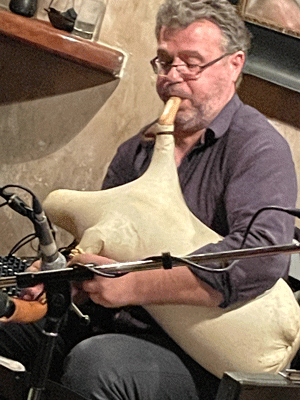
Daulute Trio featuring multi-instrumentalist George Zacharioudakis on the askomandoura (traditional Cretan bagpipe) performing in an intimate jazz bar in Chania, Crete. during the recently completed Tangents Greece Music Tour. (photo by Dore)
The Tangents Greece Music Tour is official once we have ten signed on. We're almost there.
Click For Full 2023 Tangents Greece Music Tour Testimonials
Testimonial Snippets:
Liz Gjelten, SF "The Tangents Greece Music Tour blew away my anti-tour bias."
Ewald and Stasha Detjens, Berkeley "Dore is a force of nature, a modern Apollo of music."
Virginia Browning, Berkeley "The music was ALL just gorgeous to me – healing, nurturing, exciting, beyond words."
Jeanie Daskais, Forestville "This is a unique and unparalleled opportunity to hear the finest music, performed by the most accomplished musicians, in intimate settings with local audiences."
Chris Northcutt, SF "Do whatever it takes to make this experience happen for you!."
Karen Felker, Sebastopol "It was an extraordinary experience beyond anything I could have imagined.."
Virginia Leskowski, Oakland "This tour produced delightful surprises everyday."
Vicky Julian, SF "My mind is still reeling with the wonderfulness of the whole thing."
Marlene Rice, Salt Spring island, British Columbia "Dore made sure we immersed ourselves as much as possible to be with the Greek people.."
Mo Shooer, SF "What made it all come together was Dore’s connections and affection for the musicians..."
Jill Halloran, Cupertino "Transcended my expectations"
Steve Loukas, Oakland "Dore’s anthro dive into the arcane but worth Greek/Balkan music delights us!"
Testimonial Snippets:
Liz Gjelten, SF "The Tangents Greece Music Tour blew away my anti-tour bias."
Ewald and Stasha Detjens, Berkeley "Dore is a force of nature, a modern Apollo of music."
Virginia Browning, Berkeley "The music was ALL just gorgeous to me – healing, nurturing, exciting, beyond words."
Jeanie Daskais, Forestville "This is a unique and unparalleled opportunity to hear the finest music, performed by the most accomplished musicians, in intimate settings with local audiences."
Chris Northcutt, SF "Do whatever it takes to make this experience happen for you!."
Karen Felker, Sebastopol "It was an extraordinary experience beyond anything I could have imagined.."
Virginia Leskowski, Oakland "This tour produced delightful surprises everyday."
Vicky Julian, SF "My mind is still reeling with the wonderfulness of the whole thing."
Marlene Rice, Salt Spring island, British Columbia "Dore made sure we immersed ourselves as much as possible to be with the Greek people.."
Mo Shooer, SF "What made it all come together was Dore’s connections and affection for the musicians..."
Jill Halloran, Cupertino "Transcended my expectations"
Steve Loukas, Oakland "Dore’s anthro dive into the arcane but worth Greek/Balkan music delights us!"
Daulute Trio featuring multi-instrumentalist George Zacharioudakis on the askomandoura (traditional Cretan bagpipe) performing in an intimate jazz bar in Chania, Crete. during the recently completed Tangents Greece Music Tour. (photo by Dore)
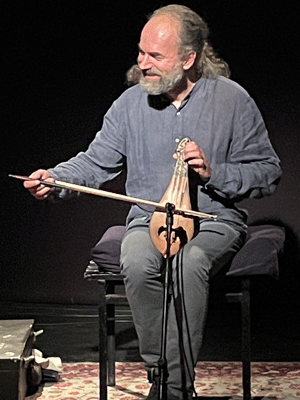
Sokratis
Sinopoulos put on a duo performance with pianist Yann Keerim to kick
off the first of 11 concerts within 17 nights during the October 2023
Tangents Greece Music Tour. (photo by Dore )